A search engine closes a gap you already know about, not one you don't know you have. Why exposure to what you wouldn't search for yourself matters more than you think.
You open a search engine to learn something new, and type a word you already know. You get excellent results for the thing you searched for — but what about the thing that never crossed your mind to search for in the first place? That is the trap: you cannot ask about what you do not know exists. Every search starts from a question, and every question starts from a prior awareness that a gap exists. But the gaps you do not know you have — in negotiation, in managing money, in dealing with a team, in making a decisive choice — stay exactly where they are, because no one searches for what they do not know they are missing.
Search closes a gap you know about, not one you don't
A search engine excels at one kind of learning: when you know exactly what you need and just want a fast answer. But it is completely powerless at a more important kind: the learning that begins when you stumble on an idea you did not know existed, and discover a gap you did not know you had. Cognitive psychology has a name for this: "unknown unknowns" — things we do not know we do not know, which no search engine can ever suggest to you, because by definition they sit outside the circle of questions you are capable of asking.
Algorithms narrow what you see instead of widening it
The problem compounds with personalized feeds: every platform learns what you like to click, then shows you more of the same. You end up inside what is known as a "filter bubble" — a world that gradually shrinks to reflect only your existing interests, while entire areas of your personal and professional life stay outside anything you ever see or get suggested.
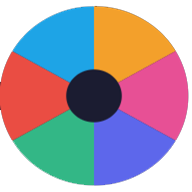
AjalahAn interactive knowledge platform that teaches life and work skills through practical learning wheels, with quizzes and completion certifica
Try the appThe fix isn't sharper search — it's wider exposure
Getting out of this trap does not require a smarter search engine; it requires a mechanism that exposes you — in a structured, not random, way — to areas you would not have chosen yourself. This is a known principle: broader learning happens when something outside you decides what you face next, not when you alone pick from a list you already know.
A wheel that chooses for you what you wouldn't have chosen
Ajalah is built on exactly this principle: dozens of interactive wheels across the most important areas of your personal and professional life, each wheel a standalone knowledge and practical reference. You spin the wheel and get an idea from an angle you would not have searched for yourself, then you apply it. The point is not to replace intentional search, but to close the gap that intentional search never reaches — because you do not yet know it exists.
Every time you spin the wheel, the circle of what you know you don't know gets a little wider — and that is where all real learning begins.
FAQ
What's the difference between what a search engine teaches and what a wheel that picks for you teaches?
A search engine answers a question you asked — a gap you already knew you had. A wheel picks the topic for you, exposing you to a gap you didn't know existed in the first place, which intentional search never reaches.
Does the filter bubble apply only to social media?
No. Any system that learns from your past clicks to show you more of the same — from search engines to learning apps themselves — can produce the same effect: a gradual narrowing of what you're exposed to instead of widening it.
How do I know I need wider exposure if I don't feel a gap exists in the first place?
That is exactly the core of the problem: you cannot feel a gap you don't know you have. So the fix isn't "paying more attention to your gaps" — it's regular exposure to topics chosen by a mechanism outside you, regardless of what you feel you need.
Does this mean intentional search is useless?
Not at all. Intentional search is essential when you know exactly what you need. The point is that it's one of two tools: you also need a mechanism that exposes you to what you wouldn't have searched for, and both together — not either alone — build complete learning.




Comments
Loading comments…