Your family and friends admire everything you make, and that feels wonderful — but it doesn't give you what you actually need: a real standard that shows where your work stands and how it can grow.
You show your new piece to your family or friends, and they say: amazing, mashallah, real talent. You feel good for a moment. But when you sit down afterward to start the next piece, you realize you know no more than you did before you showed it to them — not what it's missing, not where it stands among similar work, not even whether it's really as good as they said. Praise feels wonderful, but it isn't information, and you're left alone with the same question you started with before you showed them the work.
Loving You Doesn't Necessarily Mean Understanding Your Craft
The admiration of people around you is usually sincere, but it's admiration for you, not necessarily precision about the work. Someone who doesn't paint sees no difference between a well-resolved composition and an awkward one; someone who doesn't write doesn't notice a weak sentence buried in an otherwise good piece. Love gives you real support you need, but it doesn't give you a standard — and only a standard is what helps you improve. This doesn't diminish the sincerity of their love; it simply clarifies its limits.
Someone Who Practices Your Craft Sees What No One Else Does
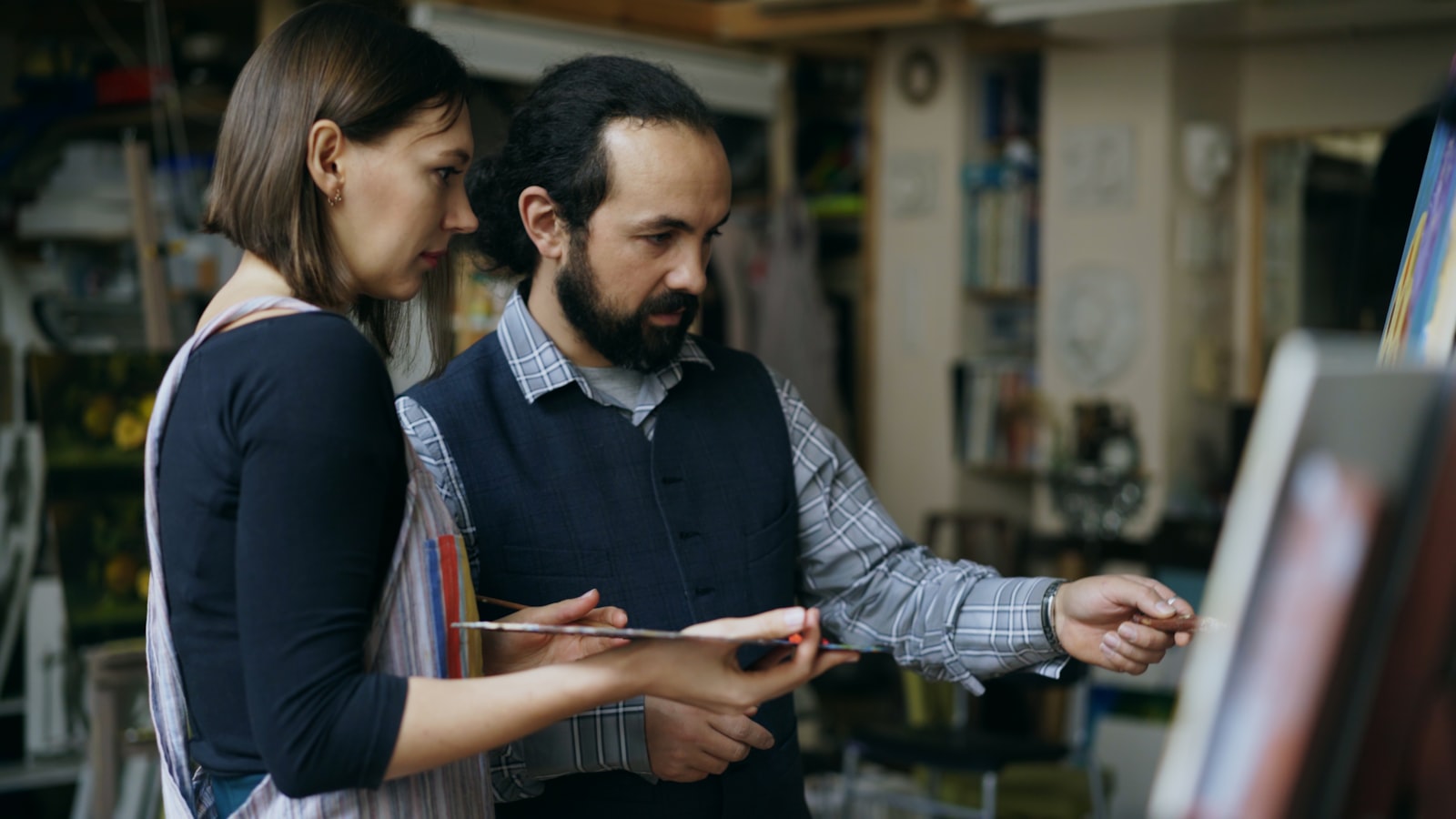
Another artist knows how long that small detail took, knows exactly where you cut corners when the work exhausted you, and knows the difference between a genuinely new idea and a repeat of one they've seen many times before. This kind of seeing doesn't come from general affection, but from direct experience with the craft itself. And just as watching alone is not enough to learn a skill — practice is what actually builds it, admiration alone is not enough to develop your work; it takes a remark from someone who knows the difference.

Zayenha ArtsAn artistic growth platform that assesses your skills, evaluates your work against clear criteria, and builds a personalized development pla
Try the appA Community of Peers Gives You What Fans Cannot
The value isn't in replacing the love of people around you, but in adding a voice you don't currently have: the voice of someone who knows the craft from the inside. A community of fellow artists and creators lets you see your work through the eyes of someone who has been where you are, and gives you real context for where your work stands — so you finally know whether you're truly improving, or just repeating your old mastery in different shapes. This kind of context rarely reaches you from outside the circle of people who practice the same work, however good the intentions of those around you.
A Place That Connects You With People Who Actually Understand What You Do
Zayenha Arts brings artists and creators together in one place to showcase their work and connect with the creative community — a community that sees your work through the eyes of someone who makes similar work, not just someone who loves you. Your work deserves to grow by a real standard, not stay surrounded by comfortable admiration that leads it nowhere new. Real growth begins when your work is seen by someone who understands it, not merely admired by someone who never asks or suggests anything.
FAQ
Isn't support from family and friends important for an artist?
Yes, and it's psychologically necessary. The problem isn't that it exists, but relying on it alone as the only source for knowing your work's level and how to develop it.
How do I tell useful criticism from unhelpful criticism?
Useful criticism usually comes from someone who practices the same craft, and points to a specific, improvable detail — not a general verdict of liking it or not.
I feel sensitive about any feedback on my work — how do I accept it from a community of artists?
Feedback from someone who practices your craft comes from a place of understanding, not attack; it becomes easier to accept once you realize they've faced the same difficulty you're facing.

Comments
Loading comments…